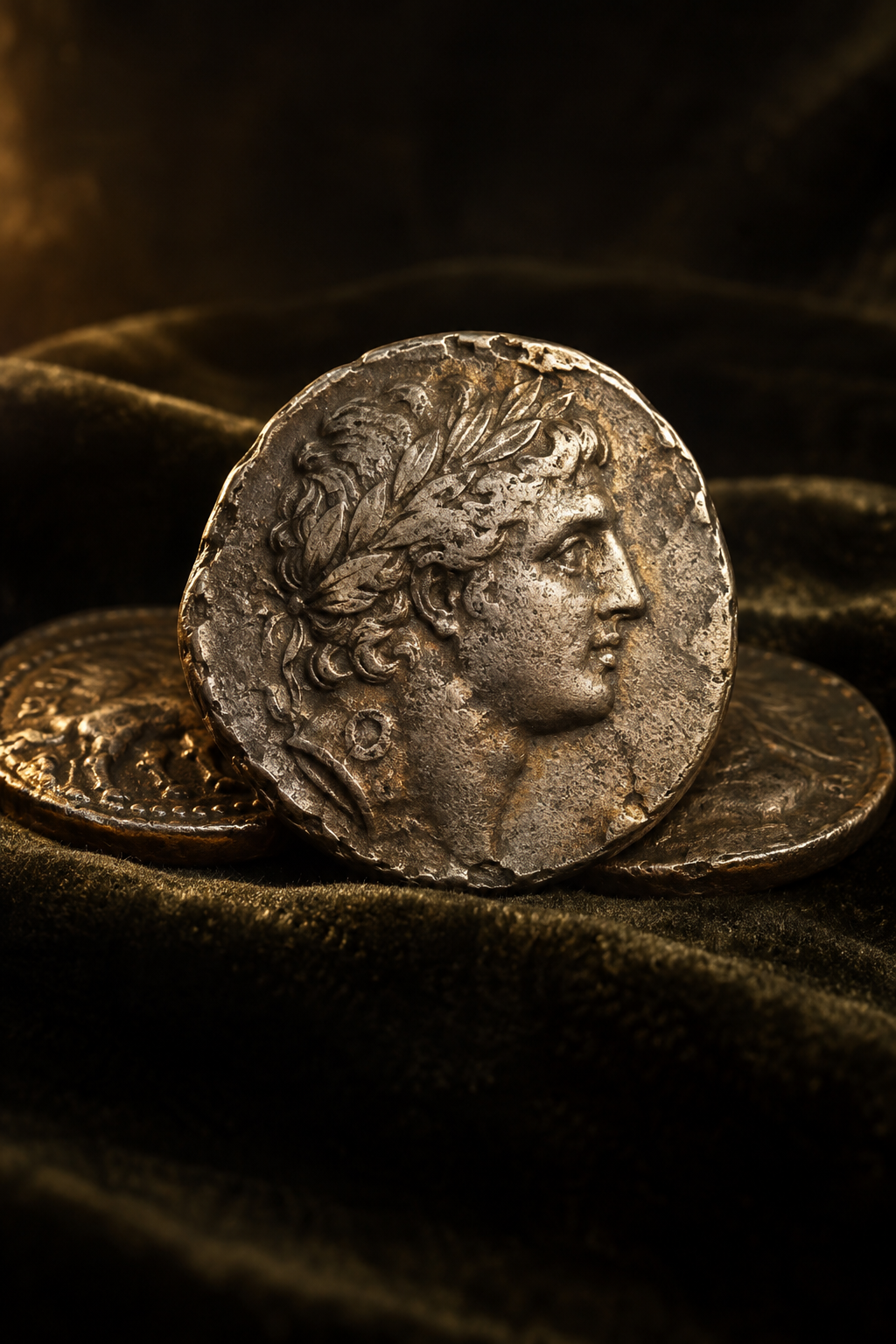
 SAMPLE REPORT · NOT AN APPRAISAL
IDENTIFICATION & VALUE
A silver-coloured circulated coin
Market value reference
$1,280–$8,600
USD$1,280–$8,600
- What to check
- Denomination & date
Curious about your find? Start with a photo to explore its identity, age and potential market value.
Upload photos and sign in to identify your item, explore value factors, and save your report.
SAMPLE REPORT · NOT AN APPRAISALBuilt around your next discovery
Four connected tools for researching an antique before buying, selling or adding it to your collection.
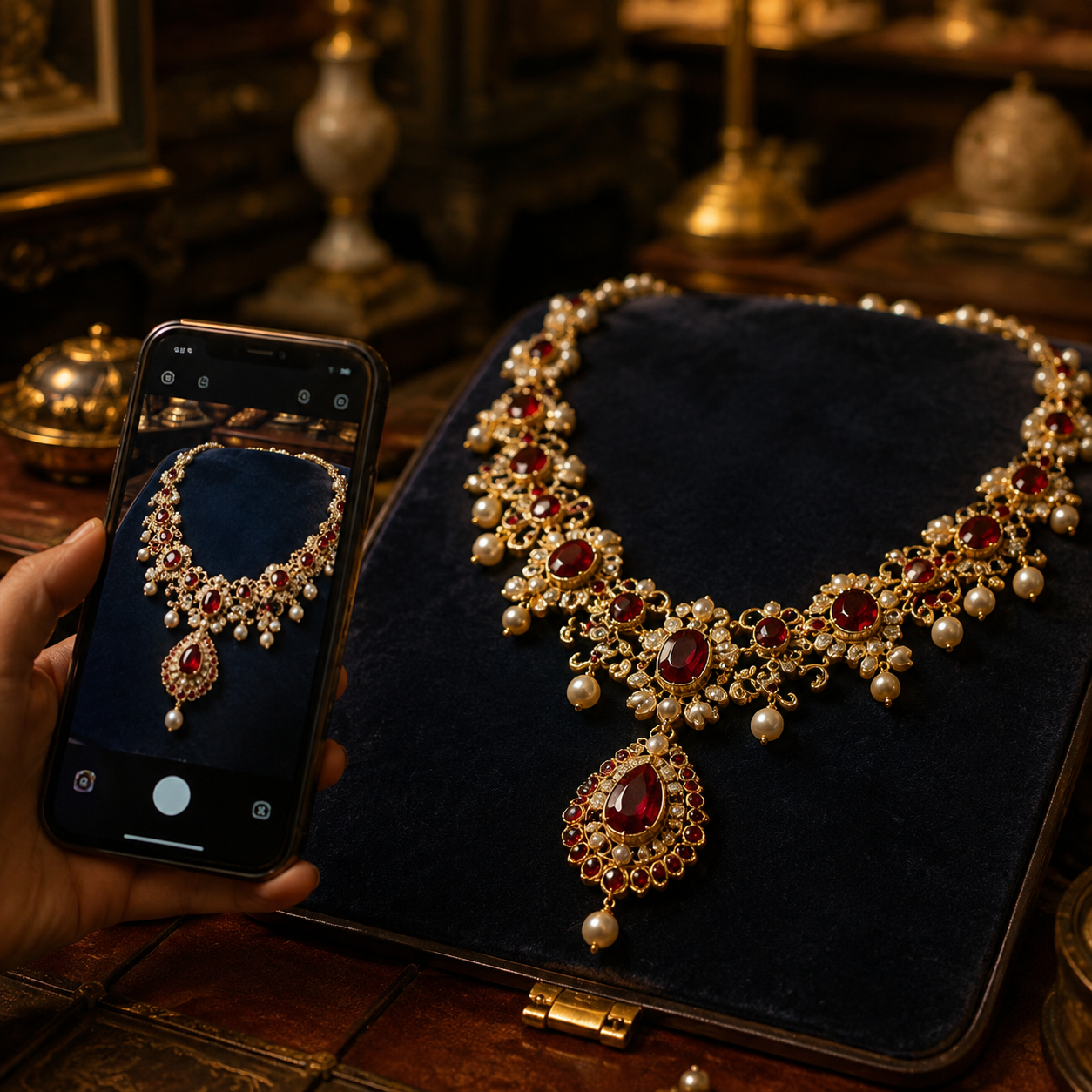
01 / PHOTO IDENTIFICATION
Identify antiques from photos and explore what makes them distinctive. Start with the whole object, then look closer at marks, materials and craftsmanship.
02 / MARKET VALUE
An antique’s value is more than a single number. Research a possible range alongside comparable sales, condition and the details that could change the estimate.
Explore the value guide →
03 / HISTORY & DETAILS
Follow the clues from an inscription, a technique or a distinctive design. Explore possible periods, styles and craftsmanship to give your find a place in history.
Learn what to look for →
04 / YOUR COLLECTION
Keep your completed reports together. Revisit the evidence, add context in expert chat, or download a copy before discussing your find with a specialist.
My collection →Save completed reports in My collection.Illustrative AI-generated artwork.
How it works
Add a full view, a maker’s mark and a detail of the condition.
Check likely matches, period clues and details that need a closer look.
Compare the range, currency, evidence and confidence before making a decision.
Save your notes, look for stronger comparisons or contact an appraiser.
Start with what you have
Choose a guide to see which details matter for your object.
Look beyond the surface
An inscription, a label or a repair can change your research. Learn what to photograph and how to record clues before you search for a maker or an estimated value.
How to identify antiques from photos →The collector’s reading room
Practical guidance for identifying, valuing and documenting antiques.
Value research
Compare the right objects and understand why asking prices and completed sales tell different stories.
Read the value guide →
Jewelry & maker marks
Look beyond the gemstone. Photograph hallmarks, settings and clasps to guide your research.
Read the jewelry guide →
Heirlooms
Build an inventory and preserve the family information that photos alone cannot capture.
Read the heirloom guide →CuriSnap offers free access and paid memberships. Public guides are free, and free signed-in accounts include 10 successful replies from the antiques expert; the other four experts require membership. Monthly membership costs USD $12.99 per month and includes unlimited chat with all five AI experts plus 140 credits per paid month. Annual membership costs USD $69.99 per year and releases 120 credits each month of the paid year (1,440 total). A complete report, including global research, uses 40 credits. Promotional copy uses 4 credits; images start at 3 credits each, and video pricing is shown before generation. Seller tools require an active membership. Member expert chat does not use credits. Memberships renew automatically until canceled. Taxes, if applicable, are shown at checkout.
Free public guides and 10 successful antiques-expert replies after sign-in. The other four experts require membership; reports require credits.
Unlimited AI expert chat, plus 140 credits per paid month for reports and member tools.
Annual membership is USD $69.99 per year. Receive 120 credits after payment and another 120 on each monthly anniversary during the paid year, for 1,440 credits in total.
Credit packs for active members: 45 credits / USD $4.99; 100 / $9.99; 220 / $19.99; 350 / $29.99; 600 / $49.99; 1,300 / $99.99. Purchased credits remain in your account after cancellation; seller tools still require an active membership.
Subscriptions renew automatically. To cancel or request a refund, contact support@curisnap.app. Cancellation stops future renewal. Refund requests are reviewed according to applicable law and the checkout terms. Failed report or seller generation returns the credits deducted for that request. Applicable taxes are shown at checkout.
View membership plansYour questions, answered
CuriSnap supports photo research for antiques, art, coins and banknotes, ceramics, jewelry, watches, minerals, jade and books. Choose the closest category or use Auto-detect.
Yes. Choose Upload photos to select an existing image. On supported mobile devices, Take a photo can open the camera; your browser may offer a file picker instead. No app download is required.
Add 1–3 photos of one object: the whole item, marks or labels, and condition details. Use even light and avoid glare. JPG, PNG and WebP files are supported, up to 10 MB each.
Results depend on photo clarity and visible details. Reports explain identification clues and uncertainty; no measured accuracy rate is claimed. A photo report does not authenticate an object.
Marks, construction and decoration can help narrow a research question. Record an inscription exactly as it appears and compare it with documented references. A visual resemblance alone is not proof of a particular maker, period or origin.
Begin with completed sales of closely comparable objects. Record the source, sale date, currency, fees and differences in condition. Our value guide explains this process. Prices in the sample reports are fictional design examples, not estimates for your uploaded object.
No. A preliminary research range does not replace an inspection or a formal appraisal report. For a formal purpose, ask the receiving organization which appraiser qualifications and report requirements it accepts.
CuriSnap offers free access and paid memberships. Public guides are free, and free signed-in accounts include 10 successful replies from the antiques expert; the other four experts require membership. Monthly membership costs USD $12.99 per month and includes unlimited chat with all five AI experts plus 140 credits per paid month. Annual membership costs USD $69.99 per year and releases 120 credits each month of the paid year (1,440 total). A complete report, including global research, uses 40 credits. Promotional copy uses 4 credits; images start at 3 credits each, and video pricing is shown before generation. Seller tools require an active membership. Member expert chat does not use credits. Memberships renew automatically until canceled. Taxes, if applicable, are shown at checkout.
Choosing photos does not submit them. After sign-in and confirmation, photos and notes are sent for analysis. Reports are saved privately; photo copies are stored with your report only with your confirmation. See the Privacy Policy for processing details.
An internet connection is required for analysis, expert chat and access to saved reports. Download a report if you need your own copy; offline app use is not supported.
Completed reports appear in My collection. You can revisit, download or delete them. Automatic market-price tracking is not currently offered.
CuriSnap does not list items, match buyers or handle sales. Use your report to organize the identity clues, condition and questions you want to discuss with a dealer or auction house.
Upload photos, sign in and generate a private research report. Continue in a separate conversation with an antique, coin and banknote, mineral and gem, jewelry or ceramic adviser. Online references depend on availability; a price range needs supporting evidence.
Your next discovery starts here
Research for your next decision
Choose a practical guide for the question in front of you.
COINS · CATALOGUE RESEARCH
CuriSnap’s coin workflow combines visual research with an optional Numista catalogue search. Compare candidate N# records, issuer and date range with the lettering, measurements and design of your coin. A catalogue match does not prove authenticity or establish a sale price.
Available in Studio after sign-in. Add Numista research when reviewing your coin photos.
Coin identification & value research guide →