CuriSnap marks and hallmarks field guide
Painting signatures and monograms: research the artwork before naming an artist
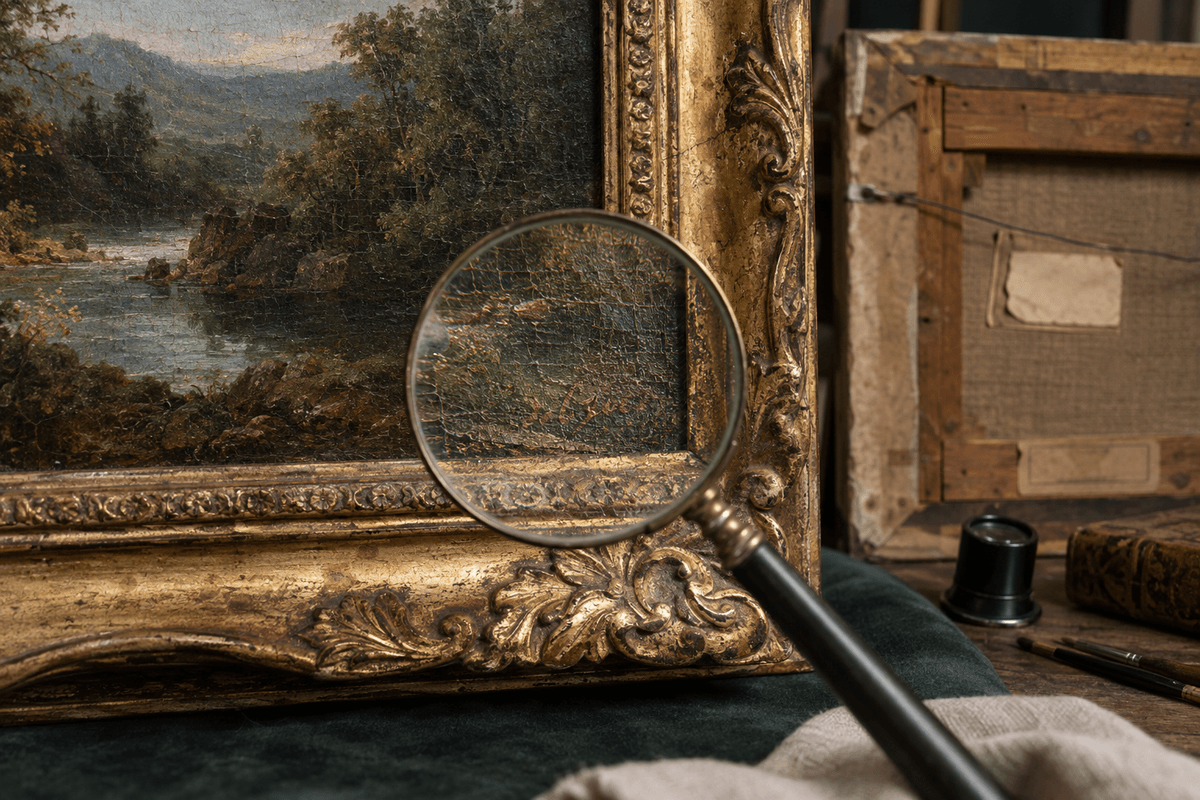
A painting signature is one part of an artwork record. Photograph the entire front, signature, reverse, stretcher, labels and frame, then compare medium, dimensions, subject, technique and provenance with documented works. A matching name does not authenticate the painting.
How should a signature be transcribed?
Copy visible letters, punctuation, placement and orientation. Use brackets or question marks for unreadable characters instead of filling in a famous name.
Which painting photographs are needed?
Photograph the entire object first, then the complete mark group, then a sharp close-up from a second light angle. Record dimensions separately. Preserve the original file; do not polish, scrape or retouch a mark to make it easier to read.
| Evidence | What to record | Research limit |
|---|---|---|
| Evidence | Record | Research use |
| Signature | Exact transcription and location | Candidate artist search |
| Reverse | Labels, stamps and construction | Ownership and exhibition leads |
| Medium and support | Canvas, panel, paper and paint | Chronology and catalogue comparison |
| Provenance | Receipts, estate records and labels | Documented chain, not oral certainty |
Why is signature-only search risky?
Signatures can be copied, added later or shared by artists with similar names. The artwork must agree with documented materials and chronology.
What can a signature prove?
A photographed mark is evidence to research, not a certificate. A mark alone cannot prove authenticity, exact age, maker attribution, precious-metal content, condition or market value. Compare the complete object with documented records and obtain an in-person test when the decision depends on material or authenticity.
What should a research file contain?
Keep dimensions, medium, front and back photographs, provenance documents, labels, source links and contradictions in one record.
Primary references
References support the stated systems and documented examples. They do not endorse CuriSnap or authenticate a reader’s object.
Frequently asked questions
Can painting signatures and monograms authenticate an object?
No. A photograph and reference comparison can narrow a research question, but authentication and material testing require appropriate examination of the object.
What photograph should I take first?
Take one sharp photograph of the entire object, followed by the complete mark group and a close-up from a second light angle.