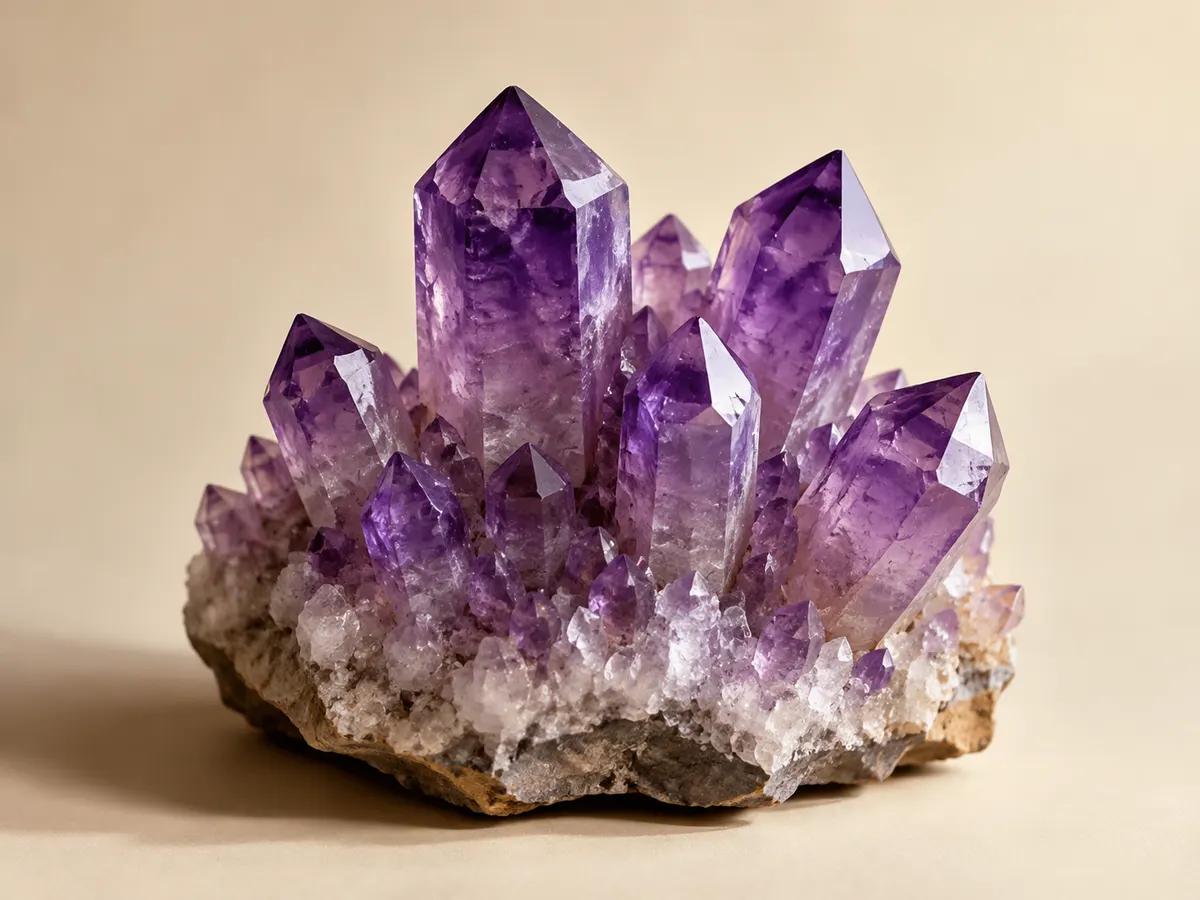
Amethyst crystal cluster
Illustration of crystal tips, cluster and base. Colour alone cannot establish identity or treatment.
View illustration ↗Start with what you can see. Compare the shape, crystal tips and surface before attaching a name or a price.
This guide uses three original AI illustrations and a five-part collecting checklist. Illustrations are not identification evidence.
CuriSnap · · Collecting guidance, not laboratory identification.
Compare the specimens ↓A mineral is a naturally occurring inorganic material with an ordered internal structure and characteristic composition. A rock is an aggregate of minerals or mineral matter. Start a collection record with that distinction instead of treating every shop name as a mineral species. USGS ↗
Open each illustration to explore the shapes. Amethyst is a purple variety of quartz; colour does not identify every purple stone. Use these illustrations as an introduction, not proof of identity, chemistry or treatment. GIA ↗
Illustration of crystal tips, cluster and base. Colour alone cannot establish identity or treatment.
View illustration ↗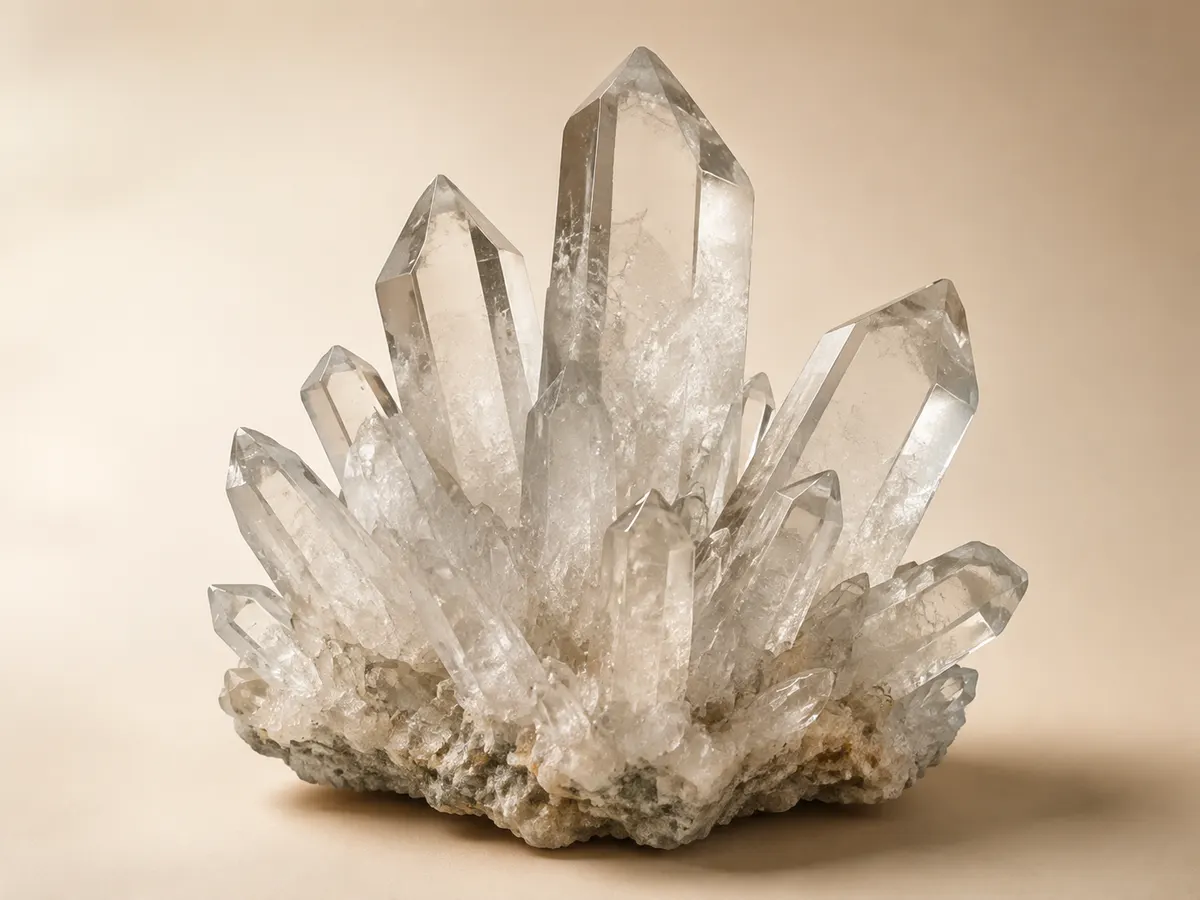
Illustration of projecting faces and tips. It does not establish a real specimen’s locality, chemistry or optical properties.
View illustration ↗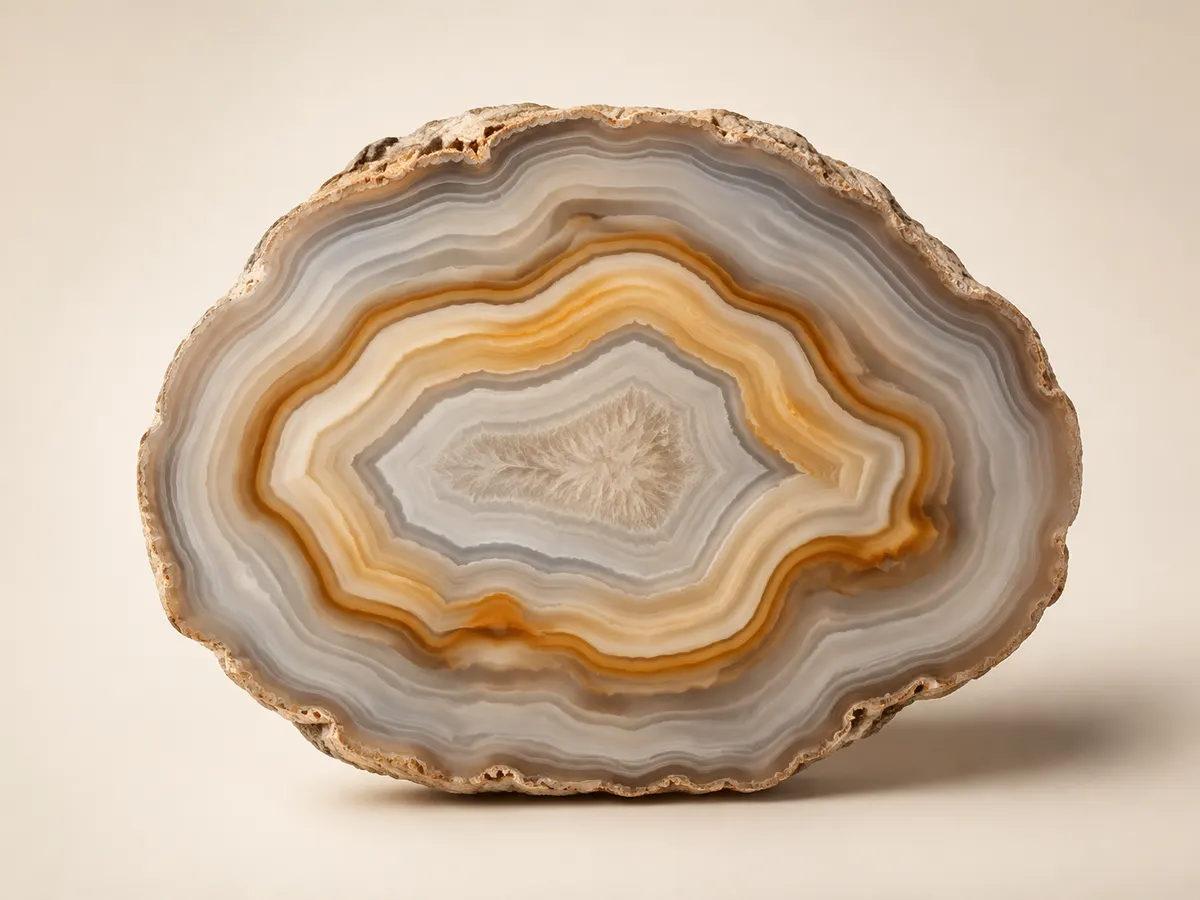
Illustration of a banded slice. Its rendered colours are not evidence of natural colour or treatment.
View illustration ↗Use the checklist below for each specimen. If a seller record omits size, condition or treatment, keep the uncertainty visible instead of borrowing its price.
| Factor | Record | Next check |
|---|---|---|
| Crystal form and completeness | Main crystals, tips, chips and reverse | Photograph the whole outline and visible damage |
| Size and form | Length, width, height; cluster, single crystal or polished piece | Do not compare different forms by weight alone |
| Colour and associations | Neutral-light photos, base and associated material | Record lighting and seller treatment disclosures |
| Locality and provenance | Original labels, receipts and seller statements | Separate documentation from inference |
| Market records | Original URL, currency, date and condition | An asking price is not a sale or net proceeds |
Ask the seller to disclose dyeing, heating, coatings, glue and repairs, and save the answer with the listing. The agate illustration above is not a documented treatment example. An unremarkable photograph does not certify an untreated specimen.
Review the agate illustration ↑For identified amethyst, GIA advises warm soapy water and warns against steam cleaning; prolonged intense light can fade some material. Do not extend this advice to unidentified minerals or mixed specimens. GIA ↗
Start with your photographs →A photograph can document shape, colour and visible damage. It does not measure hardness or chemical composition. Keep an identification as a candidate until the relevant checks support it.
No. Ask for treatment disclosure and compare the actual specimen with documented references. The illustrations on this page cannot establish treatment.
No. These are generated illustrations, not identification evidence or sale records. Compare form, measurements, damage, attribution and documented provenance against dated listings or completed sales.
Prepared by CuriSnap. Images were generated for this guide and are labelled as illustrations. These references are educational; this page is not a specimen certificate and makes no medical or healing claims.