CuriSnap marks and hallmarks field guide
How to identify unmarked pottery: form, clay, glaze and construction
Unmarked pottery can be researched by recording its profile, measurements, clay body, foot, glaze, decoration and repairs. “No mark found” is only an observation. It does not mean the object is old, handmade, rare or worthless.
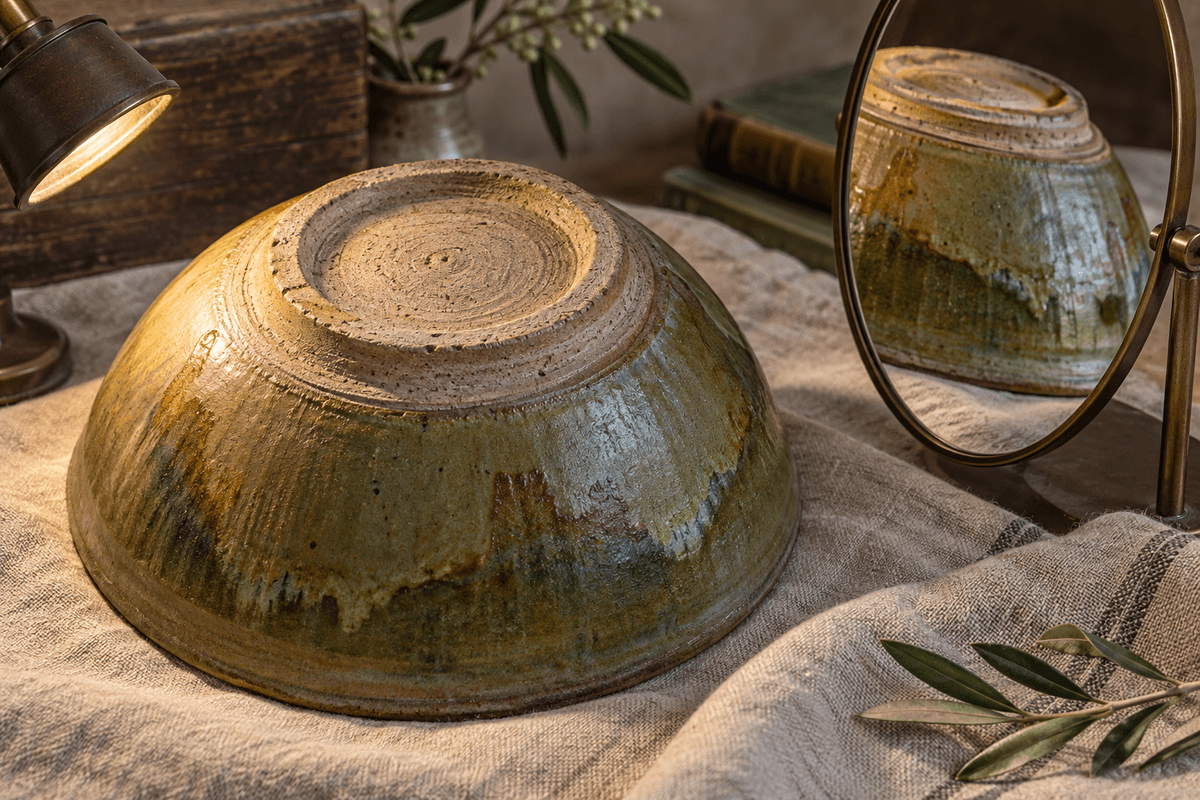
What should replace a missing mark?
Build a descriptive record: object type, height and width, profile, handle joins, body color, glaze boundary and decoration method.
Which photographs help?
Photograph the entire object first, then the complete mark group, then a sharp close-up from a second light angle. Record dimensions separately. Preserve the original file; do not polish, scrape or retouch a mark to make it easier to read.
| Evidence | What to record | Research limit |
|---|---|---|
| View | Record | Comparison question |
| Full profile | Front, side, height and width | Does the silhouette agree? |
| Base and foot | Body color, glaze edge and wear | Is construction comparable? |
| Decoration | Technique and placement | Is similarity structural or decorative? |
| Condition | Chips, repairs and restoration | Could alteration obscure evidence? |
How should museum objects be compared?
Compare complete records and dimensions. A shared floral motif is weaker evidence than matching form, body, construction and technique.
What can the absence of a mark prove?
A photographed mark is evidence to research, not a certificate. A mark alone cannot prove authenticity, exact age, maker attribution, precious-metal content, condition or market value. Compare the complete object with documented records and obtain an in-person test when the decision depends on material or authenticity.
What working name should be used?
Use a neutral label such as “unmarked handled vase, maker unknown,” then attach candidate comparisons and contradictions separately.
Primary references
References support the stated systems and documented examples. They do not endorse CuriSnap or authenticate a reader’s object.
Frequently asked questions
Can how to identify unmarked pottery authenticate an object?
No. A photograph and reference comparison can narrow a research question, but authentication and material testing require appropriate examination of the object.
What photograph should I take first?
Take one sharp photograph of the entire object, followed by the complete mark group and a close-up from a second light angle.