Antiques / Ceramics / Before Purchase
Buying old porcelain:
what should you check first?
Don't ask "how much is it worth" yet. First, clarify whether what you're buying is a complete object, a repaired object, or a story of an unverified age.
Two vases with similar patterns and similar base marks can differ greatly in size, repairs, accessories, and period of manufacture. This manual breaks down "good condition" into inspectable parts and then teaches you how to choose price references. It's suitable for browsing in stores or looking at online photos, and does not require disassembly, tapping, or cleaning.
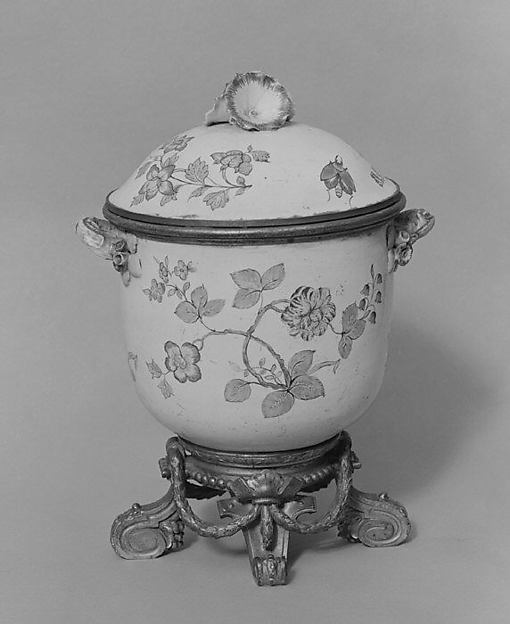
First, decide: why are you buying it?
If you just like its shape, you can accept an unknown author, but you must accept the corresponding uncertainty. If the price is mainly based on "famous artist, famous kiln, specific era," then you must question the basis of these claims. Liking an object and believing the seller's attribution are two different things.
For example: your willingness to buy at the budget of an ordinary decorative vase does not mean you can buy the same vase at the price of a genuine piece from a famous kiln.
01 / First, check the condition
"No major flaws" is too vague; check these five areas
First, ask the seller to place the object steadily. Only inspect areas that can be safely seen; do not force rotation for inspection; especially do not lift or move by handles or spouts. CCI protection guidelines warn that old repairs may have weakened.[1]
| Part | Specific Record | What to Ask |
|---|---|---|
| Rim | Location and length of chips; whether lines extend to the inner wall. Mark location with an overall photo, then add close-ups. | Has this area been repaired, ground, or repainted? Are there pre-treatment photos? |
| Neck, Handle, Spout | Seams, glue overflow, or localized color changes at connections. Do not shake by hand to test firmness. | Has it been broken and reattached? Can it still be handled like a normal object? |
| Body | Record continuous lines, localized dullness, and interrupted patterns separately; do not simply write "crazing" for all. | Can you provide photos of the same area from another angle or side? |
| Footring | Full view of the base, exposed biscuit, damage, marks; do not just provide one close-up of the base mark. | Are dimensions measured? Are there records of repairs or restorations to the footring? |
| Lid and Attachments | What is included; photograph the decoration and joint of the lid and body separately. | Is the lid original, later added, or is the seller unsure? |
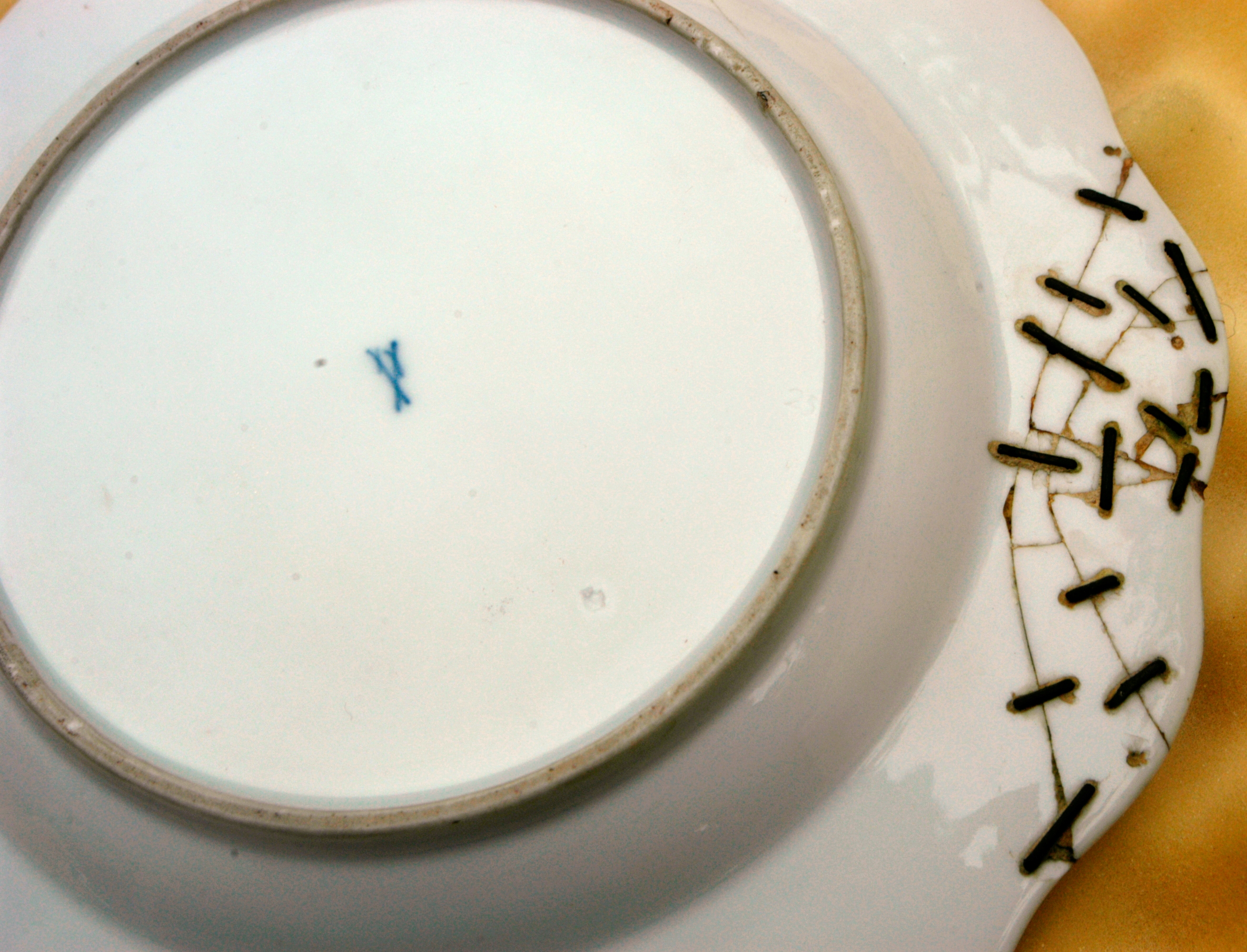
- Dark strip on the right: Staples straddle the seam, recording the repair location, not just a general statement like "average condition."
- Connecting line on the right: Follow the line to see which areas it connects; with a repair background here, it cannot be generally considered glaze crazing.
- Blue mark slightly left of center: The mark and repair status need to be recorded simultaneously. Cropping only the blue mark would omit information on the right that affects the condition assessment.

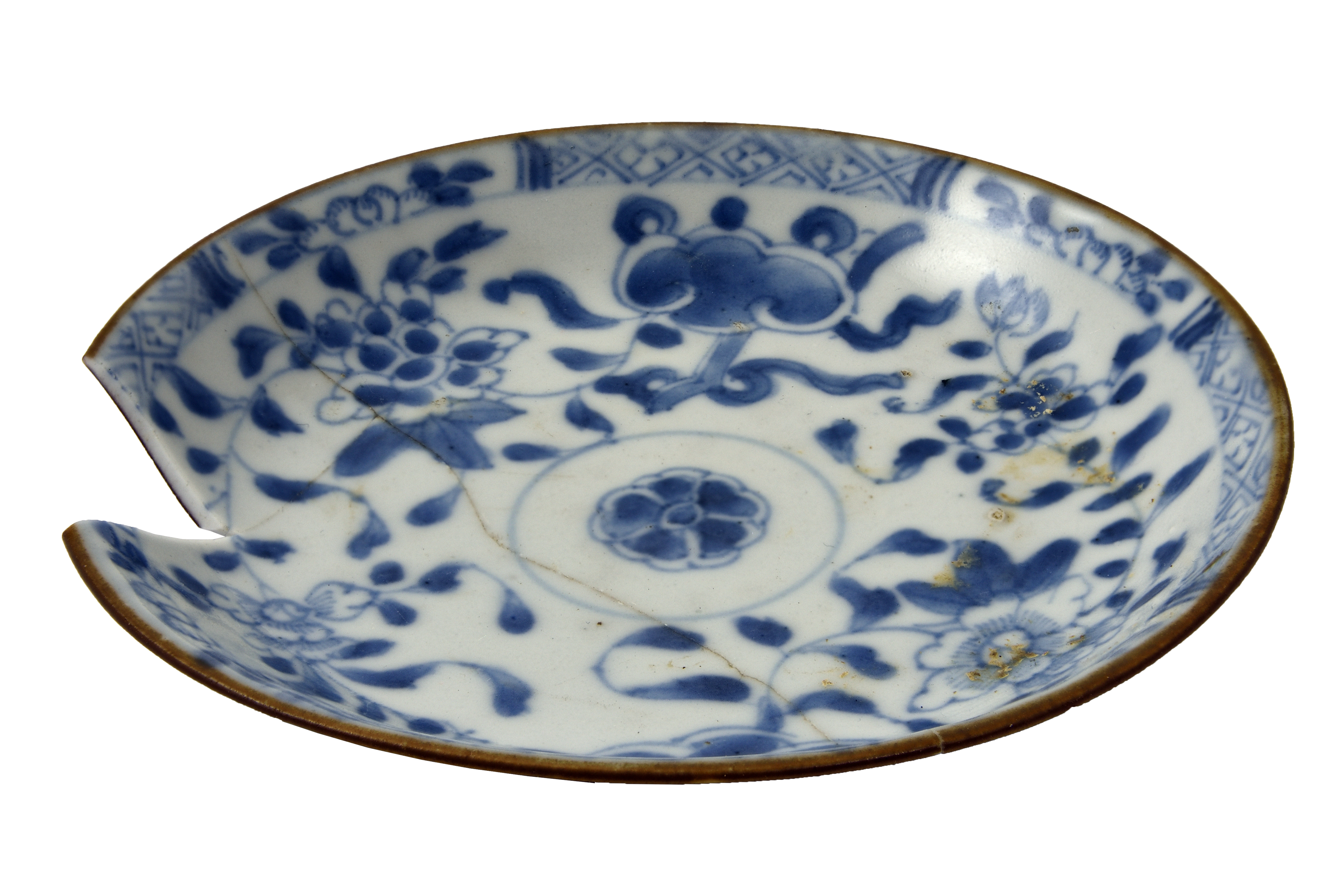
- First, look for contour breaks: The left side of the plate rim has a clear loss, which is more than just a surface line. Record the location of the chip, then ask the seller for a close-up photo with a ruler; this photo has no scale, so the size of the damage cannot be reported based on it.
- Then, trace along the line: The seam on the plate surface extends from the upper left downwards. Record which parts it passes through and check the back; do not determine the bonding method, firmness, or whether there are hidden treatments based solely on the front.
- Finally, write it as a verifiable statement: "A piece is missing from the left rim, and there is a continuous seam on the plate surface; size of damage, back condition, and treatment records are pending." This provides more information than "old age, normal wear and tear."

When you see a line, don't rush to call it a "sign of age"
A line in a photo might not show its depth clearly. What you need is its location, whether it's continuous, and whether it corresponds internally and externally, not to name it based on one picture. Keep "fine line visible on body, nature to be confirmed" in your notes, and the next step will be to specifically request more photos.
Yellowed glue or color differences can indicate old repairs, and concealed repairs may require inspection by conservation professionals; do not attempt to test authenticity by wiping with solvents.[1]
02 / Next, verify identity
A base mark is a clue, not an ID card
The V&A's ceramic terminology notes that famous marks have been imitated; the attribution of other marks remains uncertain.[2] So, "found the same base mark" only moves research one step forward, it cannot directly jump to a conclusion of authenticity.
- Copy exactly: complete text, symbols, and orientation. For unknown characters, keep question marks; do not let image recognition tools fill them in with familiar names.
- Verify the object itself: What is the reference object's form, size, material, and decoration? If only the base mark matches and other information is missing, the evidence is insufficient.
- Ask about the origin of the date: Record family oral history, purchase receipts, old photos, and catalog numbers separately. The purchase year on a receipt does not automatically equal the manufacturing year.
- Separate three timelines: When the design style appeared, when the object in front of you was made, and when it was repaired. An old style can continue to be produced in a later period.
Observations to keep
“The bottom has a four-character mark, one of which is unclear.”
This is information that the next researcher can re-verify. Retain the original image and the uncertain character.
Inferences lacking evidence
“It has this mark, so it’s from that era.”
What’s missing in between is a cross-verification of mark usage records, object characteristics, and provenance.
Continue reading: Why can’t identical-looking base marks directly date an object?
03 / Price Reference
First, exclude sales that “don’t look like” it, then look at the numbers.
The following is CuriSnap's comparison order, not a valuation formula. First, verify the object's category and attribution, then compare size, quantity, and condition; only then look at the sales figures. If the reference is a pair of objects and you only have one; if the reference is unrestored and yours has been reattached, do not equate the two numbers directly.
- Identity Criteria: Clearly attributed to an author, attributed to a certain author, or stylistically similar, are not considered the same level of certainty.
- Condition Criteria: Missing lid, replacement lid, rim repair, and reattachment should be listed separately. “Repaired” is insufficient to explain where the repair is or how extensive it is.
- Price Criteria: Separate asking prices from realized prices; record currency, date, quantity, and whether fees are included. If the fee criteria are unclear, mark as unknown.
When you can't find a close match, first organize the “known facts” and “missing information.” Don't use an expensive but dissimilar auction item to build your price confidence, and don't uniformly apply a 30% or 50% discount to all repaired items.
04 / Judgment Exercise
Both are blue and white vases, which one is easier to research?
The following are original hypothetical scenarios, not real auction items, sales records, or appraisal results.
A / Little information, complete story
“Handed down by ancestors, an old piece from a famous kiln”
Only front and base mark photos; size written as “approximate”; condition written as “old, normal signs of age”; no mention of whether it has been repaired.
B / Unknown attribution, clear record
“Date of manufacture to be determined”
Provides actual measurements, photos of the interior wall and foot rim; indicates a chip on the rim; clearly states provenance as a thrift store, with no earlier provenance record.
Expand your judgment: Is B necessarily more authentic, more worth buying?
No. B's advantage is that the information can be verified, not that its authenticity has already been proven. A needs to supplement size, condition, and provenance evidence; B needs to continue researching its identity and determine if the chip is within your acceptable range. Neither can be valued solely based on this description.
If you only want to buy a decorative item, B's known chip might be acceptable. If you want to pay a high price for a famous kiln identity, A's story is not enough. Lack of evidence does not mean fake, but it cannot be a reason to pay an identity premium.
05 / Budget
Being able to afford the listed price doesn't necessarily mean you can afford the final price.
Work backward from your acceptable total expenditure. Packaging, shipping, fees, and placement all take up budget; if an object needs repair to be displayed, get a quote first, and don't assume repair costs are zero.
Simple Budget Exercise
All amounts use the same currency. Default numbers are for calculation only. Additional percentages only apply to the item price; taxes, tiered commissions, and complex fees are not included in the formula, please verify them separately first.
Formula: (Total expenditure − Fixed costs) ÷ (1 + Additional percentage). This is the expenditure limit, not an item valuation, nor a purchase recommendation.
06 / Just Ask
Six questions for the seller
- Please provide actual height, mouth diameter, base diameter, and a complete photo of the bottom.
- Are there any chips, cracks, or repairs on the rim, inner wall, neck, or foot rim? Please indicate their location in photos.
- Are there any known treatments such as color touch-ups, reattachment, or ground rims? Are there records from before the treatment?
- Are the lid and accessories included? Are they confirmed to be original? Please indicate if unsure.
- What is the basis for the date or manufacturer attribution? If there are catalogs, receipts, or old labels, please provide verifiable information.
- How will packaging and shipping be arranged? Which costs are extra? What are the terms of transaction and return?
Before placing an order, check these four things
If the main reason for payment is “it definitely belongs to a famous artist or a certain era,” and this point is still unsubstantiated, gather evidence before deciding. A serious comparison that doesn't result in a purchase will also make the next selection more confident.
Information and Usage Boundaries
This article organizes the condition, provenance, budget, and comparison methods in collecting into a checklist. The on-site checklist and exercises were written by CuriSnap; the cited institutions have not reviewed this article.
- CCI: Care of Ceramics and Glass — corresponds to safe handling, old repairs, and professional treatment; this article does not provide self-cleaning or repair formulas.
- V&A: An A–Z of Ceramics, A is for A-marked — Corresponding marks may be imitated and their attribution uncertain, so they should not be used to authenticate a user's collection item.
The actual photos show the main body and accessories, staple repairs, marks, and rim loss. The photos do not cover all hidden repairs, so "not seeing" cannot be used to infer "none"; this article does not use AI-generated flaw images as evidence for judgment.