Antiques / Ceramics / Condition Inspection
Cracks, hairlines, staples, retouching, and re-gluing in ceramics: How to distinguish before buying?
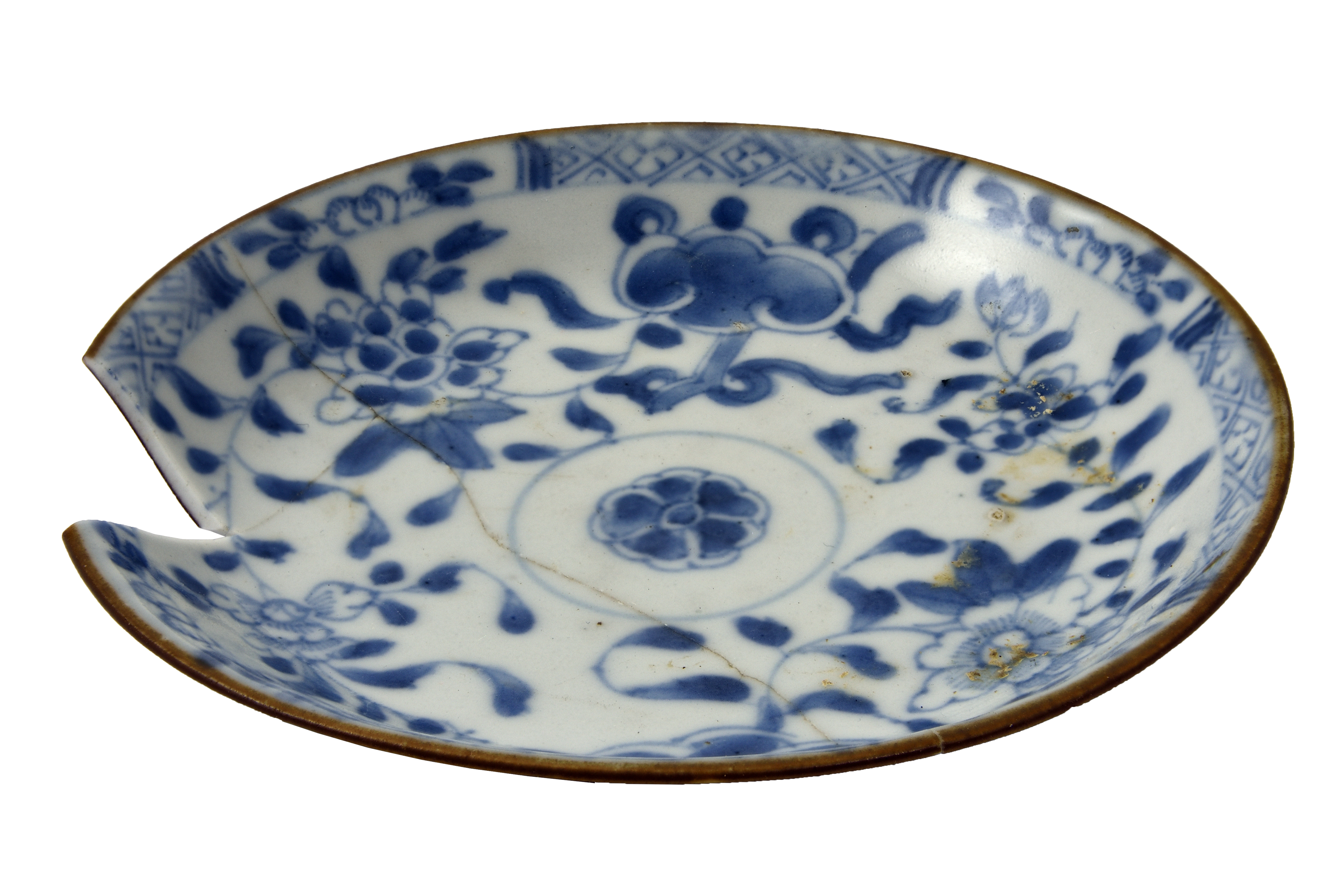
First, identify if the anomaly is in the glaze, body, a loss, or a repair material. Then, record its location, length, and whether it penetrates. Side light, back light, and full views of the rim and base are more useful than a single beautiful front-facing photo. Photos can reveal risks but cannot prove repair materials, age, or stability.
This is a pre-purchase inspection method that does not involve disassembling, scraping, or tapping. Terminology may vary by region and industry. This article uses "hairline" to record linear damage extending inward from an edge; the final assessment relies on the location and extent shown in photos, not just the name.
01 / Separate the Phenomena First
What is the difference between crazing, cracks, chips, and repair marks?
| Phenomenon | What to record first | What photos cannot confirm |
|---|---|---|
| Glaze crazing or fine lines | Whether lines are only in the glaze, whether distribution forms a network, whether color has accumulated | Cannot prove age or natural formation based on lines alone |
| Hairline or crack | Starting point, end point, length, whether it corresponds on both sides | Cannot determine depth and stability from a single angle |
| Chip or ding | Location, maximum width, whether body is exposed, whether it affects rim or foot | Cannot replace scaled dimensions with "very small" |
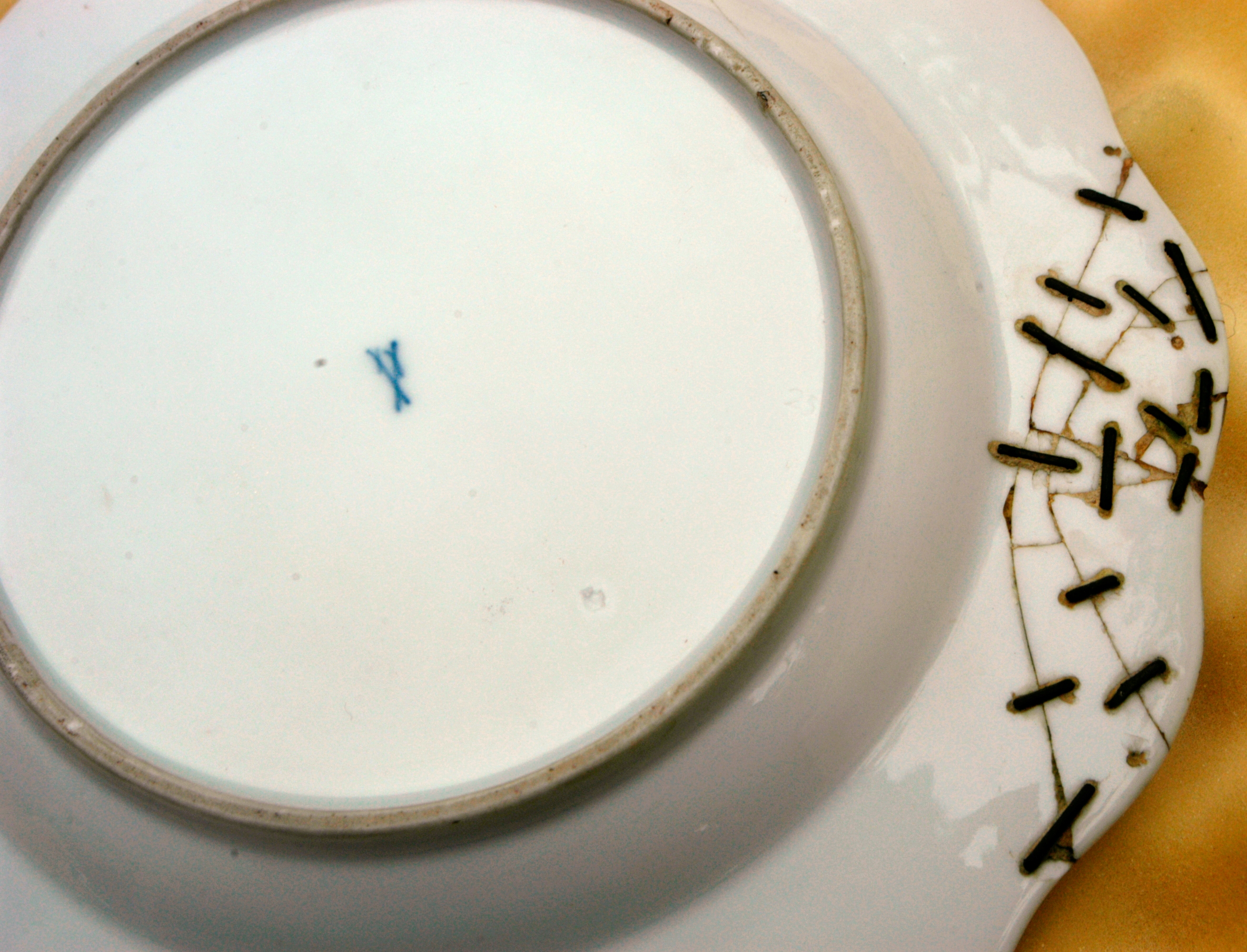
| Staples or metal clasps | Number of metal parts, hole positions, seams, corrosion and staining | Cannot accurately determine repair year based on appearance alone |
| Re-gluing, filling, or retouching | Seams, glue overflow, color difference, surface unevenness, and coverage area | Cannot determine glue, filler, or pigment composition from ordinary photos |
Signs of repair listed by the Canadian Conservation Institute include adhesive residues, joins, metal staples or rivets, fills, and inpainting. The institute also notes that ceramics are weaker at points of breakage and repair, and repairs should be part of the collection record. Source: CCI Guidelines for Preventive Conservation of Ceramics and Glass.
02 / Re-examine with Light
What can be seen with side light, back light, and normal front light, respectively?
- Normal light for overall view: First, establish the positional relationship of the form, decoration, rim, and foot.
- Side light for height differences: Let light sweep across the surface to observe filler edges, retouching coverage, and raised glue layers. Reflective differences are clues, not material identification.
- Transmitted or back light for lines: For thin-bodied and light-colored objects, use a soft light source at a safe distance to compare whether linear anomalies penetrate. Do not let the lamp touch the object or cause it to heat up.
- Pair front and back views: Take one photo at each position and record the length with a removable external ruler or paper strip; do not attach tape to the object.
- Retain unprocessed original images: Do not submit only filter-enhanced images. Enhanced versions can aid observation but should be presented alongside the original and the processing method explained.
UV light can sometimes reveal non-original adhesives, overpaint, or fillers, but different materials react complexly. CCI recommends inspection by a conservation professional familiar with the method; no obvious reaction under a household UV lamp does not prove the absence of repair.


04 / Decide whether to proceed with the purchase
How do different repairs affect use, transport, and price comparison?
Risk is not a binary "cannot buy if repaired." The location, extent, stability of the repair, the object's purpose, and price collectively determine suitability. The table below is for pre-purchase triage, not valuation percentages.
| Observation Result | Main Risk | Pre-purchase Action |
|---|---|---|
| Isolated small chip, clear extent | Sharp edges, continued chipping, condition discrepancy | Request scaled photo, compare with records of similar condition sales |
| Crack extending from rim or handle base | Stress points may continue to expand | Do not lift by handle, request front/back and transmitted light photos; extra securing needed for transport |
| Multiple pieces re-glued, filled, or large area retouched | Joint failure, original surface covered, difficult to compare original state | Request repair extent map and treatment records, for high-value transactions, have a professional inspect first |
| Staples with corrosion or staining | Metal corrosion, fragile areas around holes, historical repairs may become unstable | Do not remove yourself, assess support and professional conservation costs |
| Seller refuses to provide bottom or side-light photos | Key information cannot be verified | Factor information gaps into risk, abandon transaction if necessary |
Photo checklist you can directly copy for the seller
Please provide full views of the front, back, bottom, and rim of the object; close-up photos of all cracks, chips, staples, seams, and areas of color difference; normal light and side-light photos of the same location; and an external ruler placed next to cracks. Please state whether it has been re-glued, filled, retouched, re-plated, or re-repaired, and whether there are any repair records.
05 / Do not create new damage during inspection
Which "identification tricks" are not worth the risk?
- Do not tap to listen: Cracks and old glue may expand due to vibration; sound is not reliable proof of age or authenticity.
- Do not use needles, knives, or solvents to test glue: Scraping, solvents, and heat can damage original glaze, overpaint, or body.
- Do not lift by handles or spouts: CCI explicitly advises against lifting ceramic and glass objects by handles or spouts.
- Do not wash impulsively: Water may enter cracks and affect plaster, glue, and other repair materials; low-fired or porous pottery is at higher risk.
- Do not remove staples yourself: Metal parts and hole positions may be part of the object's history, removal should be assessed by a conservation professional.
When handling, support the object's center of gravity with both hands, first remove loose lids or accessories. Yellow, brittle, or shrinking old glue at seams should be considered a potential sign of failure; do not continue to test its load-bearing capacity.
06 / Common Questions
What else is easily misunderstood about ceramic cracks and repairs?
Does crazing always mean it's old porcelain?
No. Crazing can result from design effects, materials, and firing, and may also appear with use and environmental changes. It is not independent proof of age.
How much does a hairline reduce value?
There is no universal percentage. Object category, crack location and length, repair status, rarity, and comparable sales records all influence the impact; first, find comparable sales data for similar objects in similar condition.
If retouching is invisible, does that mean it's a good repair?
Visual integration is only one aspect. Also consider the extent of the fill, material stability, whether it covers the original surface, and whether there are treatment records; ordinary photos cannot perform these checks.
Should old staples be removed?
Do not remove them yourself. Staples may contain historical information and may be accompanied by corrosion and fragile hole positions; a ceramic conservation professional should assess whether to retain, stabilize, or remove them.
Write the condition as a record that others can verify
Do not just write "minor repair." Instead, write: "A linear anomaly starting at 2 o'clock on the rim, corresponding on both sides, visible length in photo approx. ...; three additional metal staples and brown staining on the bottom. Glue and repair date unconfirmed, transport and support need assessment."
Compiled by CuriSnap. Data verification date: 2026-09-11. Conservation and handling recommendations primarily based on the Canadian Conservation Institute's Guidelines for Ceramics and Glass; collection material records from The Metropolitan Museum of Art; photo sources and licenses as per individual captions. This article is for observation and recording, and does not replace conservation assessment, physical authentication, or price opinions.