Silver marks identification: stamps, context and research notes
For silver marks identification, photograph every visible stamp individually and the whole group together. A stamp is a research clue; this preview cannot test metal composition or verify a claimed maker.
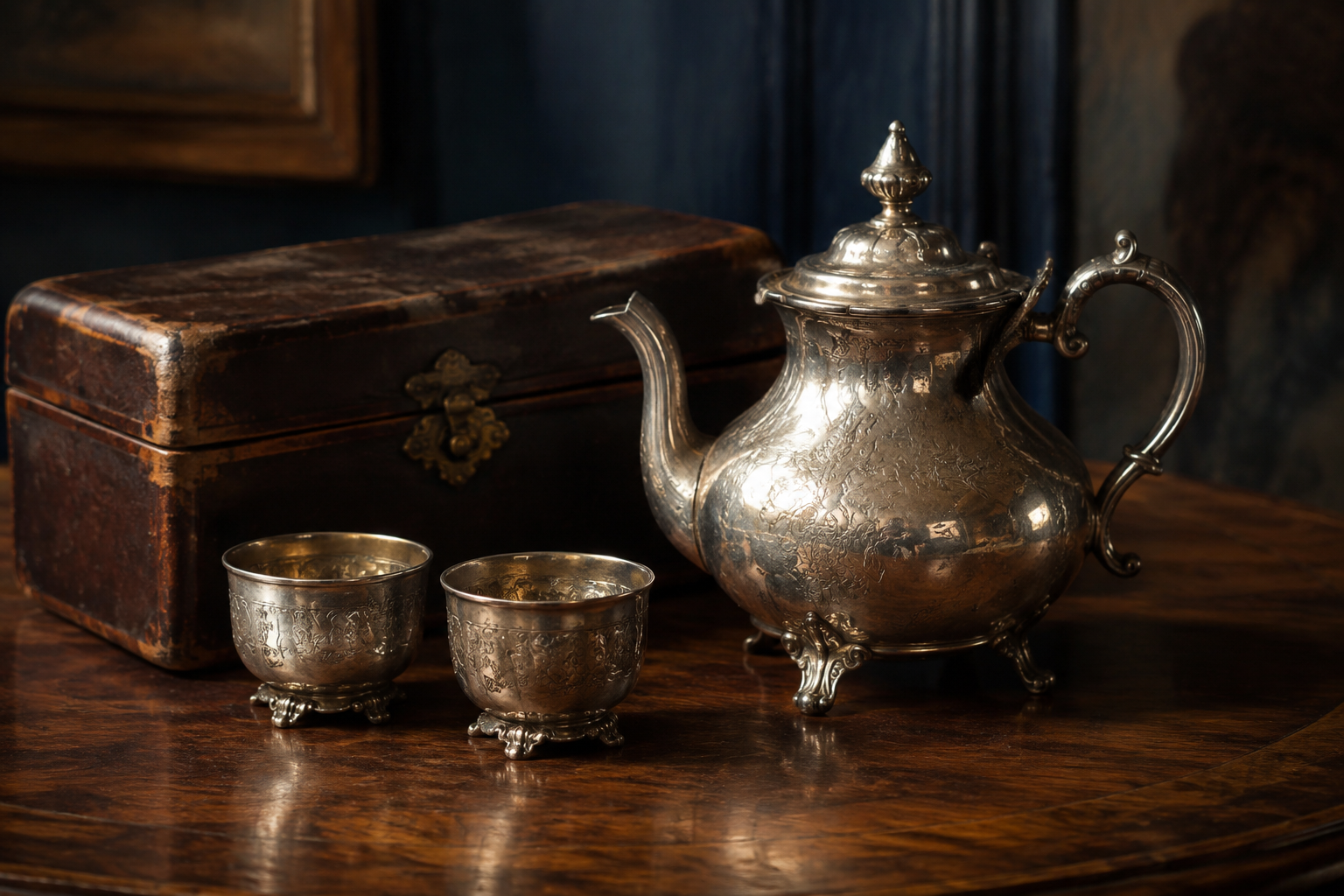
Where should I begin a silver-mark record?
Photograph the whole object and accessible stamped areas. Describe the location of each mark and preserve the order of the group. Do not polish or scrape a surface just to make a photograph for this guide.
What if the mark is partly worn?
Record a cautious transcription, leaving unreadable characters unresolved. Take another image with a different light angle. Keep the original image beside any enhanced copy and avoid building a maker attribution around an uncertain letter.
How do I compare silver objects?
Compare object type, dimensions, decoration, condition and documented material information. Do not treat plated and solid-metal descriptions as interchangeable. If the material is unknown, leave it unknown until reliable examination or documentation supports a claim.
What should my worksheet include?
| Record | Include | Purpose or question |
|---|---|---|
| Whole piece | Shape, size, decoration | Object context |
| Stamp group | Order and spacing | Context around individual marks |
| Close-up | Characters and symbols | Uncertain readings to investigate |